Daftar Produk

 Man's Search for Meaning, Gift Edition
Lihat Detail

Man's Search for Meaning, Gift Edition

 Man
Best Seller
$22.95 $14.35

A book for finding purpose and strength in times of great despair, the international best-seller is still just as relevant today as when it was first published.


“This is a book I reread a lot . . . it gives me hope . . . it gives me a sense of strength.”
—Anderson Cooper,Anderson Cooper 360/CNN


This seminal book, which has been called “one of the outstanding contributions to psychological thought” by Carl Rogers and “one of the great books of our time” by Harold Kushner, has been translated into more than fifty languages and sold over sixteen million copies. “An enduring work of survival literature,” according to the New York Times, Viktor Frankl’s riveting account of his time in the Nazi concentration camps, and his insightful exploration of the human will to find meaning in spite of the worst adversity, has offered solace and guidance to generations of readers since it was first published in 1946. At the heart of Frankl’s theory of logotherapy (from the Greek word for “meaning”) is a conviction that the primary human drive is not pleasure, as Freud maintained, but rather the discovery and pursuit of what the individual finds meaningful. Today, as new generations face new challenges and an ever more complex and uncertain world, Frankl’s classic work continues to inspire us all to find significance in the very act of living, in spite of all obstacles.

This gift edition come with endpapers, supplementary photographs, and several of Frankl’s previously unpublished letters, speeches, and essays. This book was published with two different covers. Customers will be shipped one of the two at random. One of the ten most influential books in America. —Library of Congress/Book-of-the-Month Club "Survey of Lifetime Readers"

"An enduring work of survival literature." —The New York Times

"[Man's Search for Meaning] might well be prescribed for everyone who would understand our time." —Journal of Individual Psychology

"An inspiring document of an amazing man who was able to garner some good from an experience so abysmally bad…Highly recommended." —Library Journal

“This is a book I try to read every couple of years. It’s one of the most inspirational books ever written. What is the meaning of life? What do you have when you think you have nothing? Amazing and heartbreaking stories. This is a book that should be in everyone’s library.”
—Jimmy Fallon

“This is a book I reread a lot . . . it gives me hope . . . it gives me a sense of strength.”
—Anderson Cooper, Anderson Cooper 360/CNN

"Viktor Frankl's timeless formula for survival. One of the classic psychiatric texts of our time, Man's Search for Meaning is a meditation on the irreducible gift of one's own counsel in the face of great suffering, as well as a reminder of the responsibility each of us owes in valuing the community of our humanity. There are few wiser, kinder, or more comforting challenges than Frankl's." —Patricia J. Williams, author of Seeing a Color-Blind Future: The Paradox of Race

"Dr. Frankl's words have a profoundly honest ring, for they rest on experiences too deep for deception…A gem of a dramatic narrative, focused upon the deepest of human problems." —Gordon W. Allport, from the Preface

"One of the great books of our time." —Harold S. Kushner, author of When Bad Things Happen to Good People

"One of the outstanding contributions to psychological thought in the last fifty years." —Carl R. Rogers (1959)
  • Publisher ‏ : ‎ Beacon Press; Gift edition (October 28, 2014)
  • Language ‏ : ‎ English
  • Hardcover ‏ : ‎ 200 pages
  • ISBN-10 ‏ : ‎ 0807060100
  • ISBN-13 ‏ : ‎ 978-0323306577
  • Item Weight ‏ : ‎ 13.8 ounces
  • Dimensions ‏ : ‎ 5.7 x 0.82 x 8.83 inches
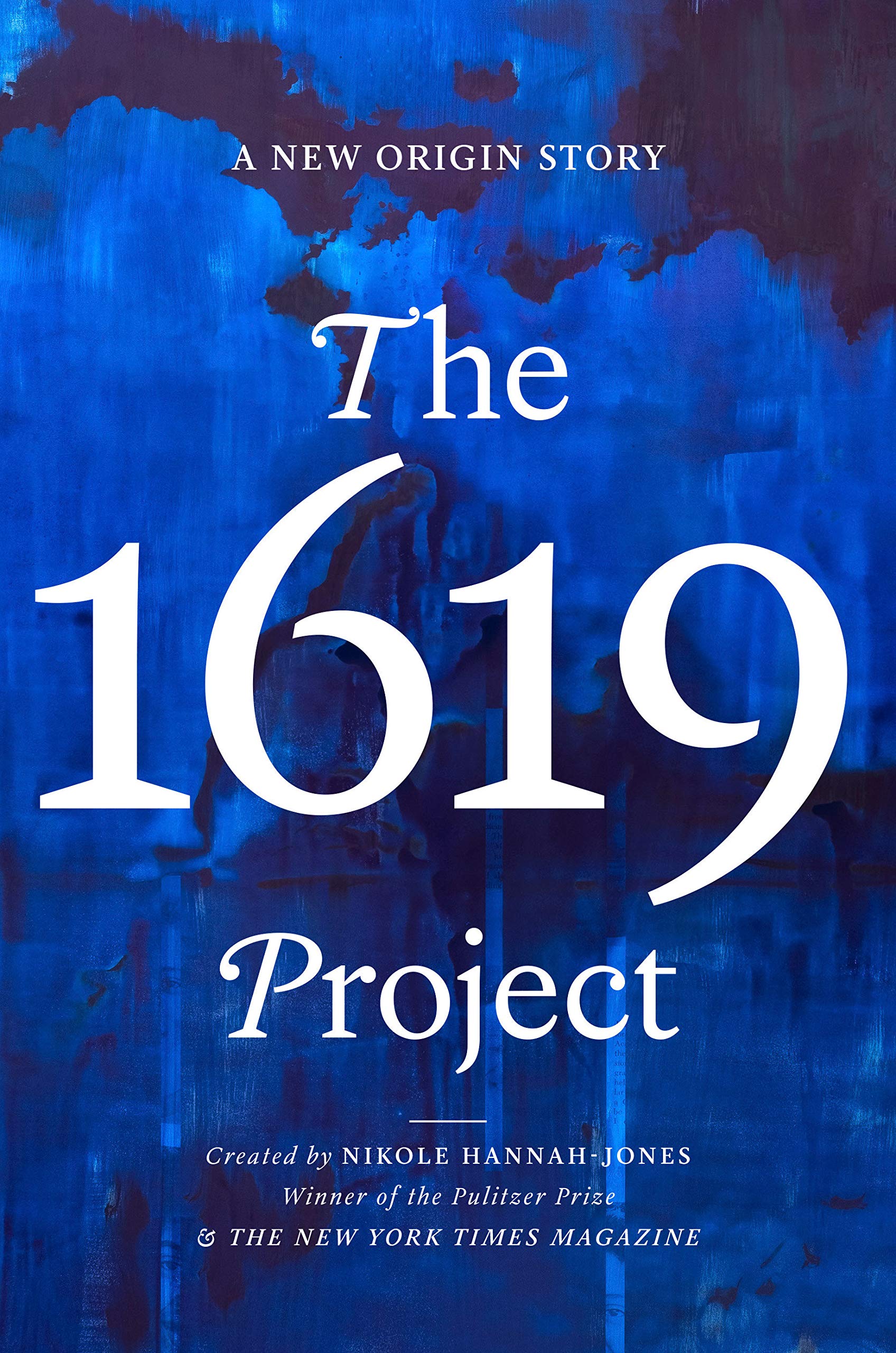
The 1619 Project: A New Origin Story
Lihat Detail

The 1619 Project: A New Origin Story

The 1619 Project: A New Origin Story
Best Seller
$38.00 $22.80

#1 NEW YORK TIMES BESTSELLER • A dramatic expansion of a groundbreaking work of journalism, The 1619 Project: A New Origin Story offers a profoundly revealing vision of the American past and present.


ONE OF THE BEST BOOKS OF THE YEAR: The Washington Post, NPR, Esquire, Marie Claire, Kirkus Reviews, Booklist


In late August 1619, a ship arrived in the British colony of Virginia bearing a cargo of twenty to thirty enslaved people from Africa. Their arrival led to the barbaric and unprecedented system of American chattel slavery that would last for the next 250 years. This is sometimes referred to as the country’s original sin, but it is more than that: It is the source of so much that still defines the United States.

The New York Times Magazine’s award-winning “1619 Project” issue reframed our understanding of American history by placing slavery and its continuing legacy at the center of our national narrative. This new book substantially expands on that work, weaving together eighteen essays that explore the legacy of slavery in present-day America with thirty-six poems and works of fiction that illuminate key moments of oppression, struggle, and resistance. The essays show how the inheritance of 1619 reaches into every part of contemporary American society, from politics, music, diet, traffic, and citizenship to capitalism, religion, and our democracy itself.

This is a book that speaks directly to our current moment, contextualizing the systems of race and caste within which we operate today. It reveals long-glossed-over truths around our nation’s founding and construction—and the way that the legacy of slavery did not end with emancipation, but continues to shape contemporary American life.

Featuring contributions from:

Leslie Alexander • Michelle Alexander • Carol Anderson • Joshua Bennett • Reginald Dwayne Betts • Jamelle Bouie • Anthea Butler • Matthew Desmond • Rita Dove • Camille T. Dungy • Cornelius Eady • Eve L. Ewing • Nikky Finney • Vievee Francis • Yaa Gyasi • Forrest Hamer • Terrance Hayes • Kimberly Annece Henderson • Jeneen Interlandi • Honorée Fanonne Jeffers • Barry Jenkins • Tyehimba Jess • Martha S. Jones • Robert Jones, Jr. • A. Van Jordan • Ibram X. Kendi • Eddie Kendricks • Yusef Komunyakaa • Kevin M. Kruse • Kiese Laymon • Trymaine Lee • Jasmine Mans • Terry McMillan • Tiya Miles • Wesley Morris • Khalil Gibran Muhammad • Lynn Nottage • ZZ Packer • Gregory Pardlo • Darryl Pinckney • Claudia Rankine • Jason Reynolds • Dorothy Roberts • Sonia Sanchez • Tim Seibles • Evie Shockley • Clint Smith • Danez Smith • Patricia Smith • Tracy K. Smith • Bryan Stevenson • Nafissa Thompson-Spires • Natasha Trethewey • Linda Villarosa • Jesmyn Ward

“Pleasingly symmetrical . . . [a] mosaic of a book, which achieves the impossible on so many levels—moving from argument to fiction to argument, from theme to theme, and backward and forward in time, so smoothly.”Slate
 
“A wide-ranging, landmark summary of the Black experience in America: searing, rich in unfamiliar detail, exploring every aspect of slavery and its continuing legacy . . . Again and again, The 1619 Project brings the past to life in fresh ways. . . . Multifaceted and often brilliant.”The New York Times Book Review
 
“The groundbreaking project from The New York Times, which created a new origin story for America based on the very beginnings of American slavery, is expanded into a very large, very powerful full-length book.”Entertainment Weekly
 
“The ambitious project that got Americans rethinking our racial history—and sparked inevitable backlash—even before the reckoning that followed George Floyd’s murder, is expanded into a book incorporating essays from pretty much everyone you want to hear from about the country’s great topic and great shame.”Los Angeles Times
 
“This fall’s required reading.”Ms.

“[A] groundbreaking compendium . . . These bracing and urgent works, by multidisciplinary visionaries ranging from Barry Jenkins to Jesmyn Ward, build on the existing scholarship of The 1619 Project, exploring how the nation’s original sin continues to shape everything from our music to our food to our democracy. This collection is an extraordinary update to an ongoing project of vital truth-telling.”Esquire, Best Books of Fall 2021

“By teaching how the country’s history has been one of depriving the rights of one group for the gain of another, and how those marginalized worked to claim those rights for all, The 1619 Project restores people erased from the national narrative, offering a motivating, if sobering, origin story we need to understand if we are ever going to truly achieve ‘liberty and justice for all.’”—Women’s Review of Books

“Those readers open to fresh and startling interpretations of history will find this book a comprehensive education. A much-needed book that stakes a solid place in a battlefield of ideas over America’s past and present.”Kirkus Reviews (starred review)

“Powerful . . . This work asks readers to deeply consider who is allowed to shape the collective memory. Like the magazine version of the 1619 Project, this invaluable book sets itself apart by reframing readers’ understanding of U.S. history, past and present.”Library Journal (starred review)

“Pulitzer winner Hannah-Jones . . . and an impressive cast of historians, journalists, poets, novelists, and cultural critics deliver a sweeping study of the ‘unparalleled impact’ of African slavery on American society. . . . The result is a bracing and vital reconsideration of American history.”Publishers Weekly (starred review)

“For any lover of American history or letters, The 1619 Project is a visionary work that casts a sweeping, introspective gaze over what many have aptly termed the country’s original sin . . . The sheer breadth of this book is refreshing and illuminating, challenging each and every reader to confront America’s past, present and future.”BookPage (starred review)

“Readers will discover something new and redefining on every page as long-concealed incidents and individuals, causes and effects are brought to light by Hannah-Jones and seventeen other vital thinkers and clarion writers . . . The revelations are horrific and empowering. . . . [An] invaluable and galvanizing history . . . revelatory.”Booklist (starred review)

About the Author

Nikole Hannah-Jones is a Pulitzer Prize–winning reporter covering racial injustice for The New York Times Magazine, and creator of the landmark 1619 Project. In 2017, she received a MacArthur Foundation Fellowship, known as the Genius Grant, for her work on educational inequality. She has also won a Peabody Award, two George Polk Awards, three National Magazine Awards, and the 2018 John Chancellor Award for Excellence in Journalism from Columbia University. In 2016, Hannah-Jones co-founded the Ida B. Wells Society for Investigative Reporting, a training and mentorship organization geared toward increasing the number of investigative reporters of color. Hannah-Jones is the Knight Chair in Race and Journalism at Howard University, where she has founded the Center for Journalism and Democracy. In 2021, she was named one of Time’s 100 most influential people in the world.

The 1619 Project is an ongoing initiative from The New York Times Magazine that began in August 2019, the four hundredth anniversary of the beginning of American slavery. It is led by Pulitzer Prize–winning journalist Nikole Hannah-Jones, along with New York Times Magazine editor-in-chief Jake Silverstein and editors Ilena Silverman and Caitlin Roper.

Excerpt. © Reprinted by permission. All rights reserved.

Chapter 1

Democracy


Nikole Hannah-Jones

My dad always flew an American flag in our front yard. The blue paint on our two-story house was sometimes chipped; the fence, or the rail by the stairs, or the front door might occasionally fall into disrepair, but that flag always flew pristine. Our corner lot, which had been redlined by the federal government, was along the river that divided the Black side from the white side of our Iowa town. At the edge of our lawn, high on an aluminum pole, soared the flag, which my dad would replace with a new one as soon as it showed the slightest tatter.

My dad was born into a family of sharecroppers on a white plantation in Greenwood, Mississippi, where Black people bent over cotton from can’t-see-in-the-morning to can’t-see-at-night, just as their enslaved ancestors had done not long before. The Mississippi of my dad’s youth was an apartheid state that subjugated its Black residents—almost half of the population—through breathtaking acts of violence. White residents in Mississippi lynched more Black people than those in any other state in the country, and the white people in my dad’s home county lynched more Black residents than those in any other county in Mississippi, for such “crimes” as entering a room occupied by white women, bumping into a white girl, or trying to start a sharecroppers union. My dad’s mother, like all the Black people in Greenwood, could not vote, use the public library, or find work other than toiling in the cotton fields or toiling in white people’s houses. In the 1940s, she packed up her few belongings and her three small children and joined the flood of Black Southerners fleeing to the North. She got off the Illinois Central Railroad in Waterloo, Iowa, only to have her hopes of the mythical Promised Land shattered when she learned that Jim Crow did not end at the Mason-Dixon Line.

Grandmama, as we called her, found a Victorian house in a segregated Black neighborhood on the city’s east side and then found the work that was considered Black women’s work no matter where Black women lived: cleaning white people’s homes. Dad, too, struggled to find promise in this land. In 1962, at age seventeen, he signed up for the army. Like many young men, he joined in hopes of escaping poverty. But he went into the military for another reason as well, a reason common to Black men: Dad hoped that if he served his country, his country might finally treat him as an American.

The army did not end up being his way out. He was passed over for opportunities, his ambition stunted. He would be discharged under murky circumstances and then labor in a series of service jobs for the rest of his life. Like all the Black men and women in my family, he believed in hard work, but like all the Black men and women in my family, no matter how hard he worked, he never got ahead.

So when I was young, that flag outside our home never made sense to me. How could this Black man, having seen firsthand the way his country abused Black Americans, the way it refused to treat us as full citizens, proudly fly its banner? My father had endured segregation in housing and school, discrimination in employment, and harassment by the police. He was one of the smartest people I knew, and yet by the time I was a work-study student in college, I was earning more an hour than he did. I didn’t understand his patriotism. It deeply embarrassed me.

I had been taught, in school, through cultural osmosis, that the flag wasn’t really ours, that our history as a people began with enslavement, and that we had contributed little to this great nation. It seemed that the closest thing Black Americans could have to cultural pride was to be found in our vague connection to Africa, a place we had never been. That my dad felt so much honor in being an American struck me as a marker of his degradation, of his acceptance of our subordination.

Like most young people, I thought I understood so much, when in fact I understood so little. My father knew exactly what he was doing when he raised that flag. He knew that our people’s contributions to building the richest and most powerful nation in the world were indelible, that the United States simply would not exist without us.

In August 1619, just twelve years after the English settled Jamestown, Virginia, one year before the Puritans landed at Plymouth, and some 157 years before English colonists here decided they wanted to form their own country, the Jamestown colonists bought twenty to thirty enslaved Africans from English pirates. The pirates had stolen them from a Portuguese slave ship whose crew had forcibly taken them from what is now the country of Angola. Those men and women who came ashore on that August day mark the beginning of slavery in the thirteen colonies that would become the United States of America. They were among the more than 12.5 million Africans who would be kidnapped from their homes and brought in chains across the Atlantic Ocean in the largest forced migration in human history until the Second World War. Almost two million did not survive the grueling journey, known as the Middle Passage.

Before the abolition of the international slave trade, more than four hundred thousand of those 12 million enslaved Africans transported to the Americas would be sold into this land. Those individuals and their descendants transformed the North American colonies into some of the most successful in the British Empire. Through backbreaking labor, they cleared territory across the Southeast. They taught the colonists to grow rice and to inoculate themselves against smallpox. After the American Revolution, they grew and picked the cotton that, at the height of slavery, became the nation’s most valuable export, accounting for half of American goods sold abroad and more than two-thirds of the world’s supply. They helped build the forced labor camps, otherwise known as plantations, of George Washington, Thomas Jefferson, and James Madison, sprawling properties that today attract tens of thousands of visitors from across the globe captivated by the history of the world’s greatest democracy. They laid the foundations of the White House and the Capitol, even cast with their unfree hands the Statue of Freedom atop the Capitol dome. They lugged the heavy wooden tracks of the railroads that crisscrossed the South and carried the cotton picked by enslaved laborers to textile mills in the North, fueling this country’s Industrial Revolution. They built vast fortunes for white people in both the North and the South—at one time, the second-richest man in the nation was a Rhode Island “slave trader.” Profits from Black people’s stolen labor helped the young nation pay off its war debts and financed some of our most prestigious universities. The relentless buying, selling, insuring, and financing of their bodies and the products of their forced labor would help make Wall Street a thriving banking, insurance, and trading sector, and New York City a financial capital of the world.

But it would be historically inaccurate to reduce the contributions of Black people to the vast material wealth created by our bondage. Black Americans have also been, and continue to be, foundational to the idea of American freedom. More than any other group in this country’s history, we have served, generation after generation, in an overlooked but vital role: it is we who have been the perfecters of this democracy.

The United States is a nation founded on both an ideal and a lie. Our Declaration of Independence, approved on July 4, 1776, proclaims that “all men are created equal” and “endowed by their Creator with certain unalienable rights.” But the white men who drafted those words did not believe them to be true for the hundreds of thousands of Black people in their midst. A right to “Life, Liberty and the pursuit of Happiness” did not include fully one-fifth of the new country. Yet despite being violently denied the freedom and justice promised to all, Black Americans believed fervently in the American creed. Through centuries of Black resistance and protest, we have helped the country live up to its founding ideals. And not only for ourselves—Black rights struggles paved the way for every other rights struggle, including women’s and gay rights, immigrant and disability rights.

Without the idealistic, strenuous, and patriotic efforts of Black Americans, our democracy today would look very different; in fact, our country might not be a democracy at all.

One of the very first to die in the American Revolution was a Black and Indigenous man named Crispus Attucks who himself was not free. In 1770, Attucks lived as a fugitive from slavery, yet he became a martyr for liberty in a land where his own people would remain enslaved for almost another century. In every war this nation has waged since that first one, Black Americans have fought—today we are the most likely of all racial groups to serve in the United States military.

My father, one of those many Black Americans who answered the call, knew what it would take me years to understand: that the year 1619 is as important to the American story as 1776. That Black Americans, as much as those men cast in alabaster in the nation’s capital, are this nation’s true founding fathers. And that no people has a greater claim to that flag than we do.
Read less
  • Publisher ‏ : ‎ One World (November 16, 2021)
  • Language ‏ : ‎ English
  • Hardcover ‏ : ‎ 624 pages
  • ISBN-10 ‏ : ‎ 0593230574
  • ISBN-13 ‏ : ‎ 978-0593230572
  • Item Weight ‏ : ‎ 2 pounds
  • Dimensions ‏ : ‎ 6.33 x 1.43 x 9.39 inches
 The Starless Crown (Moon Fall, 1)
Lihat Detail

The Starless Crown (Moon Fall, 1)

 The Starless Crown (Moon Fall, 1)
Best Seller
Rp200.000 Rp150.000

An alliance embarks on a dangerous journey to uncover the secrets of the distant past and save their world in this captivating, deeply visionary adventure from #1 New York Times bestselling thriller-master James Rollins.

A gifted student foretells an apocalypse. Her reward is a sentence of death.

Fleeing into the unknown she is drawn into a team of outcasts:

A broken soldier, who once again takes up the weapons he’s forbidden to wield and carves a trail back home.

A drunken prince, who steps out from his beloved brother's shadow and claims a purpose of his own.

An imprisoned thief, who escapes the crushing dark and discovers a gleaming artifact - one that will ignite a power struggle across the globe.

On the run, hunted by enemies old and new, they must learn to trust each other in order to survive in a world evolved in strange, beautiful, and deadly ways, and uncover ancient secrets that hold the key to their salvation.

But with each passing moment, doom draws closer.

WHO WILL CLAIM THE STARLESS CROWN?

Review

“This talented storyteller moves smoothly from Thriller to Fantasy. A terrific bit of storytelling.”―Terry Brooks, New York Times bestselling author of the Shannara novels

"When I'm sitting around the campfire, hearing of heroic deeds and derring-do, I want James Rollins to be standing across from me spinning the yarn. He grabs you at the beginning and doesn't let go, weaving a believably unbelievable world of magic and danger that is both terrifying and beautiful, cruel and tender. A masterful storyteller across the genres, James is at his best in The Starless Crown." ―R. A. Salvatore, New York Times bestselling author of The DemonWars Saga

The Starless Crown is a bold and brilliant epic fantasy by a master storyteller! Wonderfully complex characters, shifting points-of-view, unparalleled world-building, and a great sense of fun make this a certified triumph!”―Jonathan Maberry, New York Times bestselling author of Relentless and Kagen the Damned

"An action-filled fantasy quest that is gripping and thought-provoking. The high stakes and smooth writing made it a page turner.... As in his thrillers, he includes science, historical secrets, and suspense."―Mystery & Suspense Magazine

“An interesting blend of science and magic, flying ships and prophetic gods, propel this fantasy into epic territories.”―Library Journal

“Fun…the fantastical creatures and landscapes are imaginative.... Readers looking for plot-driven fantasy will enjoy the action.” ―Publishers Weekly

Praise for James Rollins:

"Rollins is what you might wind up with if you tossed Michael Crichton and Dan Brown into a particle accelerator together.” – The New York Times

"Adventurous and enormously engrossing." – NPR

"After Crichton passed away in 2008 he clearly passed the baton to James Rollins, who like Crichton, is a renaissance man." – Huffington Post

About the Author

JAMES ROLLINS is the #1 New York Times bestseller of international thrillers, sold to over forty countries. His Sigma series has earned national accolades and has topped charts around the world. He is also a practicing veterinarian, who still spends time underground or underwater as an avid spelunker and diver.
  • Publisher ‏ : ‎ Tor Books (January 4, 2022)
  • Language ‏ : ‎ English
  • Hardcover ‏ : ‎ 560 pages
  • ISBN-10 ‏ : ‎ 1250816777
  • ISBN-13 ‏ : ‎ 978-1250816771
  • Item Weight ‏ : ‎ 10.6 ounces
  • Dimensions ‏ : ‎ 6.56 x 1.78 x 9.42 inches
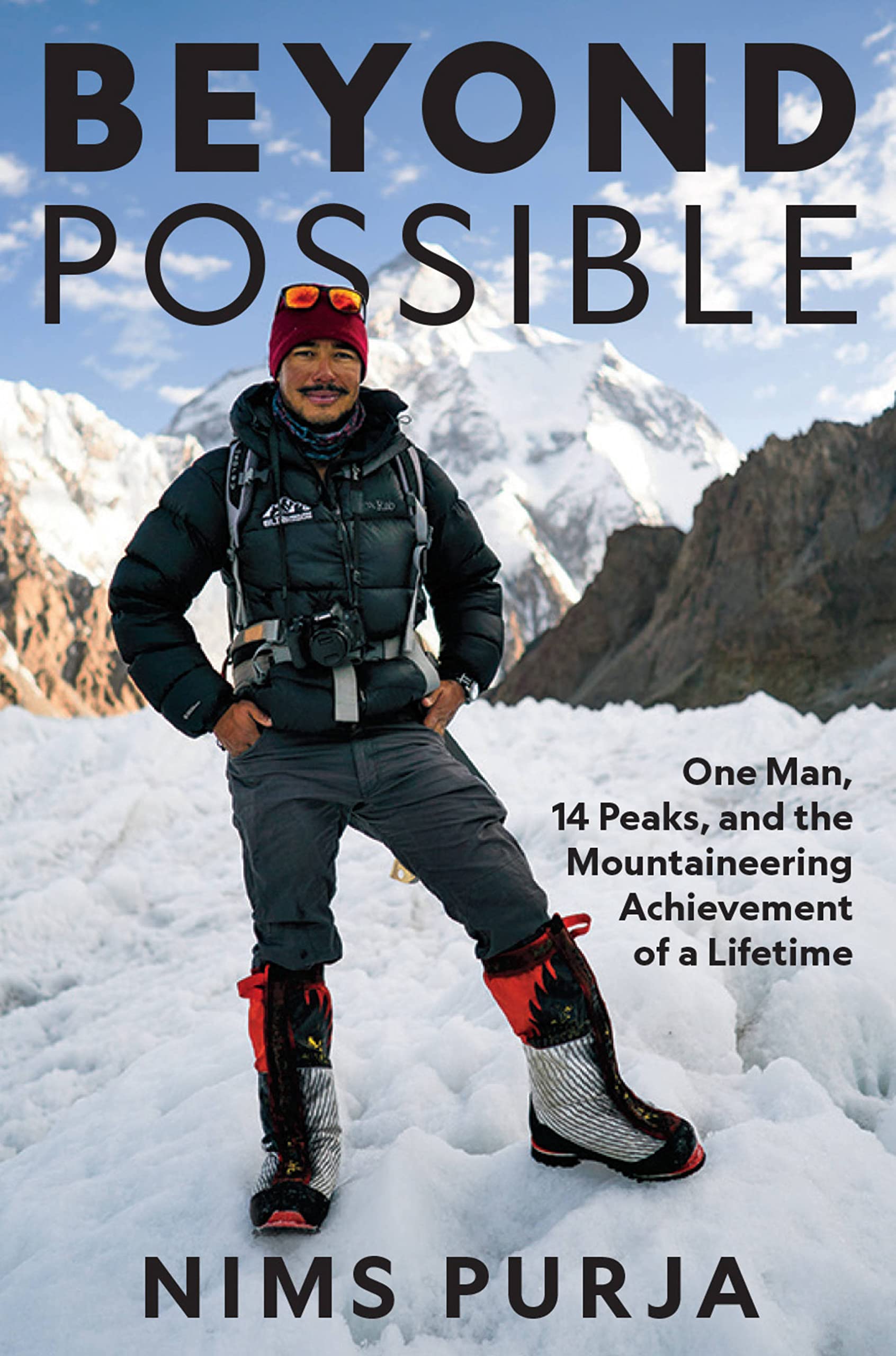
 Beyond Possible: One Man, Fourteen Peaks, and the Mountaineering Achievement of a Lifetime
Lihat Detail

Beyond Possible: One Man, Fourteen Peaks, and the Mountaineering Achievement of a Lifetime

 Beyond Possible: One Man, Fourteen Peaks, and the Mountaineering Achievement of a Lifetime
Best Seller
Rp200.000 Rp150.000

Nepali climber Nims Purja is the first man ever to summit all fourteen of the world’s 8000 meter “Death Zone” peaks. He did so in less than seven months, breaking the previous record of seven years.

In this spellbinding memoir, tied to the acclaimed Netflix documentary "14 Peaks," Purja reveals the man behind the climbs, explaining how his early life in Nepal and training as a soldier in Britain’s elite Gurkha and SBS units allowed him to achieve a mountaineering mission few thought was attainable. Purja shows how leadership, integrity, and collaboration drive world's greatest climbing feats, including the first-ever winter ascent of Pakistan’s K2―another mountaineering milestone that he achieved in January 2021.

Both profound and inspiring, this intimate book reveals what it takes to go miles beyond the possible.

About the Author

Celebrated Nepali climber Nims Purja holds multiple mountaineering world records. After serving with the British Armed Forces as a Nepalese Gurkha and as a soldier in the Special Boat Service (SBS), an elite special forces unit of the Royal Navy, he took on a series of mountaineering challenges, including climbing all 14 of the world’s mountain peaks above 8,000 meters in just over six months, reaching the summits of Mount Everest, Lhotse, and Makalu in 48 hours and completing the first-ever winter ascent of Pakistan’s K2. He lives with his wife, Suchi, in Hampshire, England.
  • Publisher ‏ : ‎ National Geographic (January 4, 2022)
  • Language ‏ : ‎ English
  • Hardcover ‏ : ‎ 320 pages
  • ISBN-10 ‏ : ‎ 142622253X
  • ISBN-13 ‏ : ‎ 978-1426222535
  • Item Weight ‏ : ‎ 1.1 pounds
  • Dimensions ‏ : ‎ 6.3 x 1.35 x 9.45 inches
Heartstopper: Volume 4: A Graphic Novel (4)
Lihat Detail

Heartstopper: Volume 4: A Graphic Novel (4)

Heartstopper: Volume 4: A Graphic Novel (4)
Best Seller
Rp200.000 Rp150.000

The fourth volume in the wonderfully sweet Heartstopper series, featuring gorgeous two-color artwork. Soon to be streaming on Netflix!

Charlie and Nick's relationship has been going really well, and Charlie thinks he's ready to say those three little words: I love you.

Nick feels the same way, but he's got a lot on his mind -- especially the thought of coming out to his dad and the fact that Charlie might have an eating disorder.

As a new school year begins, Charlie and Nick will have to learn what love really means.

Review

Praise for the Heartstopper series:

USA Today Bestseller

National Indie Bestseller

American Booksellers Association Indie Next Pick

YALSA Great Graphic Novels Selection

YALSA Quick Pick for Young Adult Readers

"Absolutely delightful. Sweet, romantic, kind. Beautifully paced. I loved this book." -- Rainbow Rowell, author of Carry On

"You'll smile watching Charlie and Nick open up to one another, and sigh as they tiptoe into romance… falling in love doesn’t get more charming than this." -- Ngozi Ukazu, New York Times bestselling author of Check, Please!

★ "Incredibly lovable from start to finish." -- Kirkus Reviews, starred review

"Realistic yet uplifting, this tale of self-discovery will make readers' hearts skip a beat." -- School Library Journal

"With all the blushing and awkward glances, it's difficult not to be charmed… The romance and realistic fiction will draw readers in to this sweet story." -- Booklist

"Will win readers with its sweet romance, its queer-friendly storyline, and its light-touch relationship drama… This graphic novel lives up to its heart-stopper title." -- The Bulletin of the Center for Children's Books

"I was blown away. It's very tender, real, and wholesome. I read each book in one sitting." -- The Nerd Daily


Praise for the Heartstopper series:

"Absolutely delightful. Sweet, romantic, kind. Beautifully paced. I loved this book." -- Rainbow Rowell, author of Carry On

"You'll smile watching Charlie and Nick open up to one another, and sigh as they tiptoe into romance... falling in love doesn't get more charming than this." -- Ngozi Ukazu, New York Times bestselling author of Check, Please!

* "Nick and Charlie's lighthearted and tender romance is delightful, and the genuine heart present in the characters makes for a wholesome and uplifting ride... Incredibly lovable from start to finish." -- Kirkus Reviews, starred review

"Realistic yet uplifting, this tale of self-discovery will make readers' hearts skip a beat." -- School Library Journal

"The romance and realistic fiction will draw readers in to this sweet story." -- Booklist

"Will win readers with its sweet romance, its queer-friendly storyline, and its light-touch relationship drama... This graphic novel lives up to its heart-stopper title." -- The Bulletin of the Center for Children's Books

"A warm, comfortable story of fledgling love." -- Publishers Weekly

"The storytelling moves effortlessly from tearful poignance to laugh-worthy moments to stirring romance." -- The Bulletin of the Center for Children's Books

"Not only does Oseman imbue Charlie and Nick with plenty of charm and vulnerability, she also treats them (and their interior worlds) with a level of understanding and care that elevates the story, blending the genres of teen romance and coming-of-age in a highly moving manner. The resulting product is an understated exploration of love and self, full of quiet joy." -- The AV Club

"A must-read for fans of slice-of-life high-school manga like Nio Nakatani's Bloom into You." -- Booklist

About the Author

Alice Oseman was born in 1994 in Kent, England, and is a full-time writer and illustrator. She is the creator of the popular Heartstopper series, which will soon be streaming on Netflix as a live-action TV show. Alice is also the author of four YA novels: Solitaire, Radio Silence, I Was Born for This, and Loveless. Visit her online at aliceoseman.com.
  • Publisher ‏ : ‎ Graphix (January 4, 2022)
  • Language ‏ : ‎ English
  • Paperback ‏ : ‎ 384 pages
  • ISBN-10 ‏ : ‎ 1338617559
  • ISBN-13 ‏ : ‎ 978-1338617559
  • Reading age ‏ : ‎ 12 years and up
  • Grade level ‏ : ‎ 7 and up
  • Item Weight ‏ : ‎ 1.22 pounds
  • Dimensions ‏ : ‎ 6.21 x 0.8 x 8.94 inches
Criminal Mischief (A Stone Barrington Novel)
Lihat Detail

Criminal Mischief (A Stone Barrington Novel)

Criminal Mischief (A Stone Barrington Novel)
Best Seller
Rp200.000 Rp150.000
In this exhilarating new thriller from #1 New York Times bestselling author Stuart Woods, Stone Barrington goes up against an enemy on the run.


After a dangerous adventure has him traveling up and down the coast, Stone Barrington is looking forward to some down time at his Manhattan abode. But when an acquaintance alerts him to a hinky plot being hatched across the city, he finds himself eager to pursue justice.

After the mastermind behind it all proves more evasive than anyone was expecting, Stone sets out on an international chase to places he's never gone before. With the help of old friends—and alluring new ones—Stone is determined to see the pursuit through to the end, even if it means going up against a foe more unpredictable than he has ever faced...

Review

"Woods fans will get their money's worth." —Publishers Weekly

About the Author

Stuart Woods is the author of more than eighty-five novels, including the #1 New York Times-bestselling Stone Barrington series. He is a native of Georgia and began his writing career in the advertising industry. Chiefs, his debut in 1981, won the Edgar Award. An avid sailor and pilot, Woods lives in Florida, Maine, and Connecticut.

Excerpt. © Reprinted by permission. All rights reserved.

1
 
Stone Barrington stood at the bar at P.J. Clarke's, already half a drink ahead of Dino Bacchetti. He and Dino had been NYPD detective partners many moons ago, when they were young and reckless, until it had been suggested by his superiors, with emphasis, that Stone's talents lay elsewhere (anywhere but the NYPD) and he had decamped to the law. He already had a law degree from NYU in his pocket, and an old classmate brought him aboard at the firm of Woodman & Weld, while he crammed for the bar exam. Dino had opted for the whole thirty years and now found himself the police commissioner of New York City. They dined together often.
 
Not this evening, though. Stone's iPhone buzzed in his pocket, and he reached for it. "It's Stone."
 
"It's Dino. It's not happening tonight. Big emergency, hands to hold. Tomorrow?"
 
"Sure, but at Patroon. I'm already at Clarke's."
 
"At seven." They both hung up.
 
"Dumped again?" a female voice said from somewhere below him. "He or she?"
 
He looked down to find a small, dark-haired young woman in a sharp black dress, complete with cleavage, newly perched on a stool he had marked for himself.
 
"He," Stone replied. "Emergency."
 
"That's what they all say," she said. "Does that make you available for a drink?"
 
"I've already got one," Stone replied.
 
"I haven't."
 
"What is your pleasure?"
 
She swiveled toward the bartender. "Knob Creek on the rocks," she said, and it appeared in a flash. She raised her glass to Stone. "Your liver," she said.
 
"I'll drink to that and yours, too, since you have such good taste in bourbon."
 
"Do you possess a name?" she asked. "And if so, what is it?"
 
"I do, and it is Stone Barrington. What about you?"
 
"I do, as well. Tink Dorsey, a gift from my older brother who liked to say that I was no bigger than a Tinker Toy. I'm five feet, two inches tall. Wasn't that your next question?"
 
"Well, no," Stone said.
 
"Then 36-C," she said. "That would have been your second question."
 
"I thought about it, then decided it was more polite not
to ask."
 
"Ah, an explorer," she said, getting a laugh. "In what vineyard do you toil?"
 
"The law, though my partners often question how hard. Your turn again."
 
"I'm about six chapters away from being a novelist," she said. "Previously I have written only for money."
 
"And will again, I'm sure. After all, you're only six chapters away."
 
"And many miles," she said.
 
"You've just got a slight case of first-novel-itis."
 
"A critical case."
 
"You'll handle it."
 
"We'll see. Does your phone call mean you're free for dinner?"
 
"Yes. How about you?"
 
"If you're buying."
 
"I could not fail to feed a starving writer." He ushered her back to the dining room, where the headwaiter found them a table and menus.
 
 
They had finished their dinner and a dessert.
 
"Would you like a cognac?" Stone asked.
 
"Yes, thank you, but I'd like it at your place. I want to see how you live."
 
Stone did not drag his feet. "Certainly," he said, signing the bill.
 
Outside, he hailed a cab, since Fred, his factotum, was off for the night. Shortly, they were deposited at Stone's front door.
 
The beeping started as Stone was turning on lights.
 
"Want me to enter the code for you?" Tink asked.
 
"Sure." He gave her the code, and the beeping mercifully stopped. "Living room," he said. "Dining room beyond that."
 
"I hadn't expected a whole house," she said. "Nobody I know has a whole house."
 
"I inherited it from my great-aunt, my grandmother's sister," he said. "And then I spent every penny I had renovating it. Did most of the work myself."
 
"That must have taken years," she said.
 
"Centuries, or so it seemed. Come see the study. We'll find brandy there." He led her across the living room and into the smaller room, then he lit a fire, poured brandy, and pointed her at the sofa.
 
"What are these four paintings?" Tink asked, pointing.
 
"Those are by my mother, Matilda Stone. She became very well-known after her death."
 
Tink walked over and tried to tilt one. "Oh, I thought it wasn't quite straight."
 
"It's firmly fastened to the wall. They were stolen once, and when I got them back I took pains to see that it wouldn't happen again."
 
She pointed at a small bronze sculpture. "May I pick this up?"
 
"Sure."
 
"What is it?"
 
"It's a sculpture of a horse soldier by Frederic Remington, called The Sergeant."
 
"Very handsome." She replaced the bronze, then went and sat down and accepted a cognac. "What a nice room!"
 
"Thank you." He sat down beside her
 
"I trust you can see my cleavage from there?"
 
"Indeed, and a lovely sight it is."
 
"I'm told it's my best feature."
 
"I'll have to have a look at your other features before I can decide," he said.
 
She laughed that pleasant little laugh again. "A little more cognac, and I'm sure that can be arranged." She tilted her head back, so he could lean down from his height and kiss her. When he did, she placed a hand on the back of his neck and pulled him into the kiss. Neither of them let go for some time.
 
She finally came up for air. "Your tour is incomplete," she said. "You haven't shown me your bedroom, yet."
 
He took her hand and pulled her to her feet. "That, too, can be arranged."
 
Much later a slight rustle of bedclothes woke him. "Must you go?"
 
"Yes, I must, but we can do it again. Zip me."
 
He felt his way, then zipped.
 
"I left my card on the bedside table." She kissed him and pulled up the covers. "Now, you go back to sleep." She left the door open, and he could hear her footsteps down the stairs. He drifted off.
 
He was awakened by the bell of the dumbwaiter, bringing breakfast, but he had to run for the bathroom first. That work done, he got into a light robe and got back into bed, noticing that her card was not on the other bedside table. Never mind, he'd find her.
 
At mid-morning, he showered and shaved, then dressed and went downstairs to his office. On the way, he passed the study and noticed that the lights were still on. He walked in and checked his mother's paintings, a nervous habit he'd acquired after they had been stolen and recovered. They were still in place.
 
He turned toward the light switch, and as he did, he stopped. Something was missing. He checked the paintings again, then turned his attention to the bookcase. The Remington bronze was gone.
 
2
 
Stone slid in behind his desk, picked up the phone, and speed-dialed Dino.
 
"Bacchetti."
 
"I want to report a robbery."
 
"Normally, I would transfer you to burglary, but my interest is piqued. Who robbed you?"
 
"A small, dark-haired woman with wonderful breasts-wonderful everything, actually."
 
"I hope you got something of value in return."
 
"You know the little Remington bronze in my study?"
 
"The Sergeant? I've coveted it for years."
 
"That."
 
"What is its value?"
 
"I paid twenty-five grand for it, at auction, some years ago."
 
"I suppose you didn't get that much for it, in exchange for services rendered."
 
"You could say that. I mean, it was spectacular, but not that spectacular."
 
"Does this robber have a name?"
 
"Let's put it this way, she used one: Tink Dorsey."
 
"I don't suppose you have a photograph."
 
"We didn't get that far."
 
"So, shall I put out an APB for a short, dark-haired woman with great tits, carrying a small but expensive sculpture?"
 
"You think that would get some action?"
 
"I think a lot of street cops would be on the lookout for the tits."
 
"Yeah, you might need to rephrase."
 
"I think we'd better just post it on our stolen art page. The art boys probably even have a photograph of it on file."
 
"Go."
 
"We still on for dinner at Patroon?"
 
"Sure."
 
"I don't suppose you'll be bringing Tink Dorsey."
 
"Not unless you capture her." They both hung up.
 
His secretary, Joan Robertson, buzzed him.
 
"Yes?"
 
"Someone who says her name is 'Tink' is on two."
 
Stone hesitated, then decided not to bring up The Sergeant. He pressed the button. "Good morning!"
 
"I trust you slept well for the rest of the night."
 
"I did. I would have called to thank you, but I couldn't find your card."
 
"Oh, shit. I forgot. I used them all up, gotta get some reprinted. Here's my number." She gave him one with a 917 area code, a cell phone.
 
"Got it."
 
"Am I interrupting anything?"
 
"Only the practice of law. You want to join a friend and me for dinner?"
 
"The friend who dumped you last night?"
 
"One and the same."
 
"Love to."
 
"Can we meet at Patroon?" He gave her the address. "Seven?"
 
"See you there. How are we dressing?"
 
"I'm wearing a necktie."
 
"Then I won't."
 
"It would just get in the way of what some have called your best feature," he said.
 
She laughed and hung up. He did like that laugh.
 
 
Stone got there first, then Dino walked in right behind Tink, who was already laughing. They put her in the booth between them.
 
"Did you two get introduced?"
 
"We did not," she said.
 
"Tink Dorsey, this is Dino Bacchetti."
 
She shook his hand. "Oh, I know that name. Aren't you the DA, or something?"
 
"I'm the police commissioner for the City of New York," Dino replied, flashing his badge, "and you're under arrest."
 
She laughed. "And what for? I haven't had time to steal the silver yet."
 
"For the theft of a valuable work of art," Dino said. "A small Remington sculpture called The Sergeant."
 
She reached into her bag. For a moment, Stone thought she might come up with a gun, but instead she came up with the Remington and set it on the table. "You mean this?"
 
"That's what I mean," Dino said. "I take it you're confessing."
 
"Well, I was listing to the right when I left Stone's house last night, and I needed some ballast."
 
It was Dino's turn to laugh.
 
"Really, Stone, I only borrowed it for the night, just so I could look at it some more. You didn't need to call the cops, let alone the police commissioner."
 
"I always go directly to the top," Stone said.
 
"I like that in a man."
 
Dino barged in. "Are you dropping the charges, Stone?"
 
Stone hefted The Sergeant in his hands and inspected it thoroughly. It had the right number stamped into the bronze. "I guess I have no alternative," he said.
 
"Gee, thanks," Tink said. "What a compliment!"
 
"You were a bad girl, and you gave me a fright," Stone explained.
 
"I guess I was, but my heart's in the right place."
 
"I can't deny that," Stone said.
 
They ordered.
 
 
Fred was waiting outside with the Bentley, and it was raining. They piled in.
 
"This is gorgeous," Tink said, stroking the leather. "If I'd known you drove a Bentley, I would have stolen the car, instead."
 
"Home, Fred," Stone said. "Tink, that's Fred in the front seat. Fred, she's Tink Dorsey."
 
"Good evening, Ms. Dorsey."
 
"So far," she replied.
 
"Can you manage to stay the whole night?" Stone asked.
 
"What's the matter, you afraid I'll steal something else?"
 
"Only my heart."
 
"I was aiming farther south, but I'll take what I can get."
 
Fred pulled into the garage.
 
"An indoor Bentley!" Tink said. "This gets better and better!"
 
Upstairs, they went to their respective dressing rooms and emerged simultaneously, equally naked. Stone yanked the covers back, and they fell into bed.
 
"Just think of this as a continuation of last night," Tink said. "Pretend I never left."
 
Stone's position muffled his reply.
 
"Don't talk, sweetie," she said. "You're doing just fine," she breathed.
 
 
It took half an hour to wear themselves out, then they slept. Tink woke up first; her head was in his lap, so she didnÕt have far to go.
 
Stone made a noise.
 
She stopped. "Sorry about that."
 
"I think it was Helen Lawrenson who said, by way of instruction, 'It's like eating a banana, without leaving any teeth marks.'"
 
"I'll remember that," she said, then returned to her work.
 
Stone came explosively.
 
She crawled up and put her head on his shoulder. "I'll bet you think you're done for the night," she said.
 
"Absolutely."
 
"Don't count on it."
 
3
 
The dumbwaiter bell went off. Tink sat bolt upright and wide-eyed. "Is the house on fire?"
 
"No, that's breakfast."
 
"Breakfast makes a noise?"
 
"Every morning about this time," Stone said. "It's best to just get used to it. Changing it would mess up everything." He pushed the cart over to the bed and put a tray on her belly.
 
"What am I having?"
 
"English scrambled eggs, breakfast sausages, half a Wolferman's English muffin, orange juice, and coffee. If you want something else, you have to place your order at bedtime."
 
"I was busy at the time," she said.
 
He reached across her, took a remote control from the bedside chest and pressed a button. She rose to meet her tray. "Fantastic," she said. "What are English scrambled eggs?"
 
"Cooked very slowly with lots of butter until they're creamy, but not runny. Americans overcook eggs, and they lose most of their flavor."
 
She took her fork and tried them. "Mmmmm," she said. "What a surprise." She tried a sausage. "You know what I'm having next time?"
 
"Wait, I'll get a pencil."
 
"Don't bother, I'm having exactly this."
 
Stone switched on the TV, to Morning Joe.
 
"What is this?" she asked.
 
He explained to her about MSNBC.
 
"Don't you get Fox News?"
 
"I can, but I don't like being lied to."
 
"I thought it was MSNBC that did all the lying."
 
"That's because you were being lied to."
 
"Okay, it's your TV. I'll go along."
 
They gobbled down their breakfast.
 
"Who are all these people on TV?" she asked.
 
"People who don't appear on Fox News."
 
"Wait a minute, I get it. You're a Democrat?"
 
"Wrong. I'm a yellow-dog Democrat."
 
"What's that?"
 
"A Democrat who'd vote for a yellow dog before he'd vote for a Republican."
 
"Oh, well, I hardly ever vote, anyway," she said.
 
"Thank God for that."
 
"Something I don't get."
 
"Ask."
 
"You're rich, but you're a Democrat?"
 
"Well, there's me and George Soros and Warren Buffett and a few others."
 
"How'd you get all the money?"
 
"I got it the old-fashioned way. I inherited it."
 
"Your parents were rich?"
 
"No. I had a wife who had been married to a very rich man before me, and when she died, I inherited a chunk of her estate."
 
"What did she die of?"
 
"A shotgun."
 
Her face fell.
 
"Not mine. It belonged to a former lover of hers."
Read more
  • Publisher ‏ : ‎ G.P. Putnam's Sons (December 28, 2021)
  • Language ‏ : ‎ English
  • Hardcover ‏ : ‎ 320 pages
  • ISBN-10 ‏ : ‎ 0593331729
  • ISBN-13 ‏ : ‎ 978-0593331729
  • Item Weight ‏ : ‎ 1.11 pounds
  • Dimensions ‏ : ‎ 6.38 x 1.24 x 9.29 inches
It Could Happen Here: Why America Is Tipping from Hate to the Unthinkable―And How We Can Stop It
Lihat Detail

It Could Happen Here: Why America Is Tipping from Hate to the Unthinkable―And How We Can Stop It

It Could Happen Here: Why America Is Tipping from Hate to the Unthinkable―And How We Can Stop It
Best Seller
Rp200.000 Rp150.000
Refreshingly candid . . . Get off Instagram and read this book.—Sacha Baron Cohen

From the dynamic head of ADL, an impassioned argument about the terrifying path that America finds itself on today—and how we can save ourselves

It’s almost impossible to imagine that unbridled hate and systematic violence could come for us or our families. But it has happened in our lifetimes in Europe, the Middle East, Africa, and Asia. And it could happen here.

Today, as CEO of the storiedADL (the Anti-Defamation League),Jonathan Greenblatt has made it his personal mission to demonstrate how antisemitism, racism, and other insidious forms of intolerance can destroy a society, taking root as quiet prejudices but mutating over time into horrific acts of brutality. In this urgent book, Greenblatt sounds an alarm, warning that this age-old trend is gathering momentum in the United States—and that violence on an even larger, more catastrophic scale could be just around the corner.

But it doesn’t have to be this way. Drawing on ADL’s decades of experience in fighting hate through investigative research, education programs, and legislative victories as well as his own personal story and his background in business and government, Greenblatt offers a bracing primer on how we—as individuals, as organizations, and as a society—can strike back against hate. Just because it could happen here, he shows, does not mean that the unthinkable is inevitable.

Review

“Jonathan Greenblatt and I have two things in common: a love of storytelling and a strong belief that social media has dangerously amplified bigotry, misogyny, and conspiracy theories. In this refreshingly candid read, Jonathan is not afraid to call out leaders of tech companies like Facebook and Twitter to be more accountable for their role in spreading hatred. Get off Instagram and read this book.”—Sacha Baron Cohen 
 
“Jonathan Greenblatt has written an urgent work of deep love and deep anxiety — for the Jewish people, for America, for the state of Israel . . . It Could Happen Here will help shape the conversation on antisemitism and hate in America.”—Yossi Klein Halevi, Senior Fellow, Shalom Hartman Institute, and author of Letters to My Palestinian Neighbor  
 
It Could Happen Here describes the insidious ways that unchecked hate can seep into society from the periphery, growing from the seeds of fringe thought into harmful rhetoric and heinous actions. Greenblatt has written a playbook against hate that shows just how fragile the balance between calm and chaos can be when we turn a blind eye. We should heed the warning.”—Darren Walker, President, Ford Foundation  
 
“For over a century, ADL has played a crucial role in identifying and countering antisemitism, prejudice, and hatred. In his book, Jonathan Greenblatt helps readers take the battle to their own social networks, by offering practical advice to individuals and institutions on ways to confront and even dismantle hatred in its early stages. In this time of extreme political polarization and quickly growing distrust, Greenblatt's comprehensive work can help us build bridges, build trust, and uproot harmful prejudices from our midst.”—Natan Sharansky, Israeli politician, human rights activist, and a former prisoner of conscience in the Soviet Union 
 
“There has never been a more perilous time for individual rights and liberties. And as Jonathan Greenblatt illustrates so powerfully in It Could Happen Here, we must understand our history, both recent and distant, to avoid the threats to our rights today. Greenblatt offers his piercing insights from multiple perches he’s served in—from the White House to the ADL. We must act now, heed his advice, and fight for what’s right.”—Anthony Romero, Executive Director, ACLU 
 
"Purpose-driven business leaders are taking a stand against the rise of hate at home and around the world. As CEO of ADL, an institution that has been at the forefront of the fight against antisemitism, racism and all forms of intolerance, Jonathan Greenblatt has a vision for how companies—and their CEOs—can act responsibly and pragmatically for our collective future. This book lays out the how and why.”—Shamina Singh, Founder & President, Center for Inclusive Growth, Mastercard 
 
It Could Happen Here is an indictment of antisemitism on both the left and the right. Jonathan Greenblatt explains his journey and our predicament, and offers a crucial road map for an age of resurgent hate.”—Rabbi David Wolpe, Sinai Temple, Los Angeles  
 
“In this pivotal moment of American history, Jonathan Greenblatt has written a vital book. It is at once a primer on the various extremisms of our era, and a guide to how to build a healthy, diverse democracy. This book is essential reading.”—Eboo Patel, Founder and President, Interfaith Youth Core, and author of Acts of Faith and We Need to Build 
 
“In this moment,&# -- No Source

About the Author

JONATHAN GREENBLATT is the CEO of ADL (the Anti-Defamation League), the world’s leading anti-hate organization with a distinguished record of fighting antisemitism and advocating for just and fair treatment to all. Jonathan joined ADL in 2015 after serving in the White House as special assistant to President Obama and director of the Office of  Social Innovation and Civic Participation. He joined the government after a distinguished career in business as a successful social entrepreneur and corporate executive: he cofounded Ethos Brands, the company that launched Ethos Water (acquired by Starbucks, 2005), founded All for Good (acquired by Points of Light, 2011), and served as a senior executive at realtor.com (acquired by News Corp, 2014).

Product details

  • Publisher ‏ : ‎ Mariner Books (January 4, 2022)
  • Language ‏ : ‎ English
  • Hardcover ‏ : ‎ 304 pages
  • ISBN-10 ‏ : ‎ 0358617286
  • ISBN-13 ‏ : ‎ 978-0358617280
  • Item Weight ‏ : ‎ 1.08 pounds
  • Dimensions ‏ : ‎ 6 x 1.09 x 9 inches
  • Customer Reviews:
    3.6 out of 5 stars 15 ratings